2017年12月6日 星期三

2017年12月5日 星期二

2017年12月3日 星期日
僧醫會歲末感恩暨兩岸和平消災祈福超薦法會
佛教僧伽醫護基金會(http://www.sangha.tw)
歲末感恩暨兩岸和平消災祈福超薦法會
12月3日於新北市板樹體育館
 |
| 弘一大師孫女 |


106年度歲末感恩暨兩岸和平消災祈福超薦法會 順利圓滿
直播視頻 請至僧醫會YouTube頻道觀賞https://goo.gl/utsG13
引魂儀式https://goo.gl/Q4rDm1
鐘鼓齊鳴、迎請諸山長老 灑淨 https://goo.gl/NwHapa
果清長老致詞1https://goo.gl/s4PaF1
僧醫會董事施文儀醫師致詞 https://goo.gl/s64B9t
果清長老開示1https://goo.gl/nrRyw5
果清長老開示2 https://goo.gl/xN4a1o
慈明嘉陵弦樂團妙音供養https://goo.gl/xN4a1o
石磊國小「天籟之音合唱團」https://goo.gl/CZE9eS
张笛籈女士 交響星空聖觀音https://goo.gl/XY5hgp
台北安寧國際研討會
2017台北安寧國際研討會
健康促進式之安寧療護:提升死亡識能以創造高價值照護
2017Taipei International Symposium on Palliative Care
Health-Promoting Palliative Care: Developing Death Litercy for High-Value Care
Taipei City Hospital, Taipei, Taiwan Dec. 2-3, 2017
大會手冊PROGRAM
大會手冊PROGRAM


2017 Taipei Declaration for Health-Promoting & Literacy-Enhancing Palliative Care
The 2017 Taipei International Symposium calls for a Health-Promoting & Literacy-Enhancing Palliative Care, aiming to improve wellbeing and life literacy – a combination of health and death literacy - in the context of caring for a life-limiting illness in the communityY This declaration is built on the five basic principle listed below:
1. Integrate Palliative Care into Public Health Policy: To establish a healthcare system integrating health promoting palliative care into primary care and develop an education program to advocate concepts of advance care planning and palliative care to the general population.
2. Create Supportive Environments: To engage both formal and non-formal health service providers by acknowledging their practice wisdom and collaboration in predicting and preventing suffering.
3. Strengthen Community Actions: To create a compassionate community with high level of empathy, by involving families, neighbors, and all members in the community to build mutual relationships, exchange experience, share responsibilities and participate actively in the caring networks.
4. Develop personal skill: To Enable patients to make individualized advance care planning and empower the family to develop the knowledge and skill related to death literacy after a systematic learning and strategic shared decision making processes.
5. Reorient Health Services: To empower the health care providers by enhancing the death literacy training and education and accumulating practice wisdom and experience of person-centered and community-based home care and to accompany the patient and the family along the life course.
We further declare the health care providers, who deliver palliative and hospice care to the elderly and individuals with life-limiting illness in the community, should adhere five essential attributes as postulated previously.
Accessibility: Let the patients at end-of-life and their family to reach and use the health services at all time and assist them overcome temporal, spatial, economic, and psychologic barrier to health care. Comprehensiveness: Handle the great majority of end-of-life issues encompassing physical, emotional, social and spiritual dimensions of health and envision every possible problems.
Coordination: Coordinate the home care services with the patients’ families, the non-formal health service providers, neighbors and the community and coordinate the patients’ plan of care with his or her personal desire.
Continuity: Provide health care services to the suffering continuously without losing interest or enthusiasm, make hospice and palliative services as a regular source of care in the community and make the commitment of being with the patients and the community for the rest of life.
Accountability: Have an obligation to promote the health and prevent the suffering for the cared community and have an obligation to correct defciencies and expand skills and services.
2017年12月1日 星期五
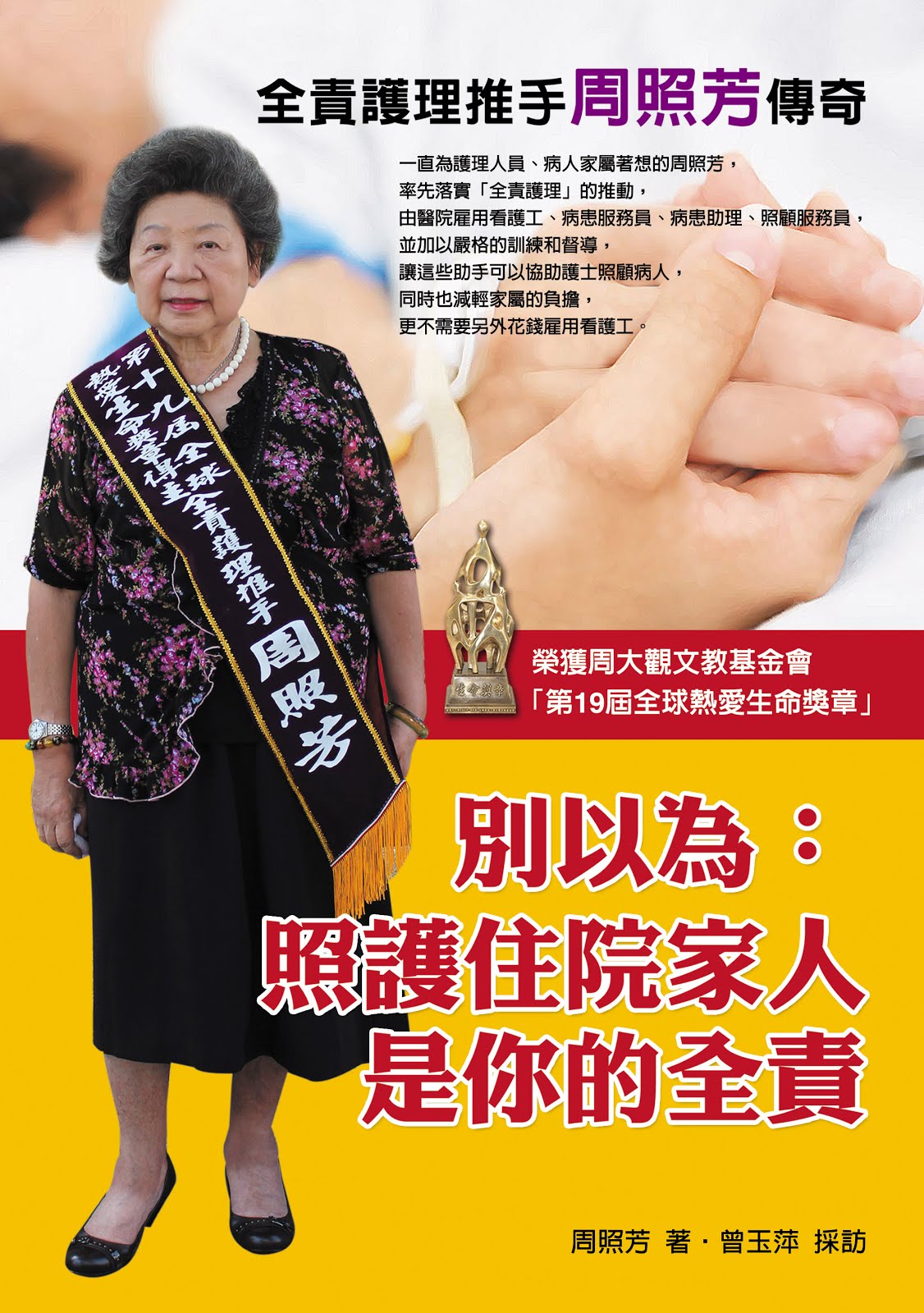
請破除誤解合力推動全責護理
|
健康E世界〔106年12月號〕【社長的話】請破除誤解合力推動全責護理/陳榮基
|
|
英國的南丁格爾(Florence
Nightingale)於1854年帶領38位護士到克里米亞野戰醫院工作。讓昔日地位低微的護士,社會地位與形象都大為提高,成為崇高的象徵。「南丁格爾」也成為護士精神的代名詞。她創立了現代護理制度,就是住院病人在醫院中的生活起居及疾病照顧全由護理人員負責。
現代西方的醫療傳入台灣後,為了省錢,住院病人都要由家屬陪同住院,負責生活起居的照顧,甚至還要在醫院的庭院炊煮三餐。直到留美回國的陳翠玉女士,擔任台大醫院護理部主任時,才設立了營養部,負責病人三餐,她也設立供應室,負責手術器材的消毒,並且訓練助理護士,開始全責護理。
可惜後繼者沒有繼續推動,因為便宜的醫療給付,其他的”生活起居”的任務,仍舊需要一位家屬陪同住院處理。後來經濟慢慢改善,有錢的病人,就雇請”看護”來陪伴病人,造成一人生病,兩人住院的陪病文化。於是一千床的醫院,每天至少有兩千人”住院”,不但造成醫院的嘈雜環境,增加感染控制的困難,也增加醫院的水電開銷及治安漏洞。但是大家習以為常,就忘記了住院病人的照護應該是醫院要負全責的!
歐美先進國家的醫院施行Total
nursing care (全責護理)的精神的做法,與台灣天壤之別。病人在醫護人員及接受護理師督導的專任護佐(Nurse’s
aide, NA/或 Nurse helper/helper in a hospital)的照顧下,都沒有家屬或自聘的”看護”陪同。這些醫院聘顧的專任NA,現在衛生福利部(衛福部)及勞動部通稱為”照顧服務員”,簡稱”照服員”。
現在要自費聘請一對一24小時工作的看護,一天的費用是2000到2400元(十天2萬多,一個月6-7萬),對很多家庭(月薪22K者!)已經是沉重的負擔。而少子化以後,很多家庭的年輕人都要上班,只好請年老住院的父母由另一位年老的配偶陪同”住院”照顧了。護理師們除了照顧病人,還常常要因為這位”老人照顧者”(care giver)跌倒、昏倒或生病,要忙著送她/他去急診!反而增加護理人員的負擔與困擾。更不要說很難教這位老人學會如何妥善照顧老伴。
可惜的是台灣醫界長年錯誤的護理照護系統,讓醫院主管或經營者及很多護理人員不認為住院病人的生活起居照護是護理的一部分。以至於今年主管護理業務的衛生福利部護理及健康照護司(照護司)推出的106年度「醫院推動住院病人友善照護模式輔導計畫」(即推動全責護理輔導試辦計畫),因為經費及觀念的問題,只有零星醫院的護理部參加試辦。
有些關注醫護人員工作時數及醫病比/護病比的團體或醫護人員,居然擔心已經是血汗的醫院,如果再推動全責護理,要護理人員包辦住院病人的生活起居,那不是會讓護理人員更加血汗?
其實全責護理的推動,是要增聘足夠的照服員(NA),接受護理師的督導,共同擔負起全院住院病人的照顧,將家屬或看護的病人照護工作交由照服員來作,沒有增加護理人員的工作負擔。護理師與接受過訓練的照服員合作,比與家屬合作,更能減輕負擔。如此不但可以避免護理人員的血汗,更可提升照護品質;去除醫院的雜亂,除了改善感染控制,改善治安,也減少醫院的水電等的浪費。是對醫院、護理及病人三贏的局面。
有些人又擔心現在推動長照2.0已經招不到足夠的照服員,如果再推全責護理,不是更爭搶人力嗎?其實如果全面推動全責護理,醫院聘請的照服員是白天一對四,夜班約一對十;可以減少人力的浪費,讓長照與醫院都可聘到需要的照服員!
又有人擔心,醫院要自聘照服員,錢從哪裡來?其實大家都應有沒有白吃的午餐的觀念,住院病人如果每天負擔全責護理照護費800元,比起現在的2000-2400元,大多可以接受;再讓健保負擔每日給付全責護理費600元,每年約10億元,並非很大的負擔,應該可以接受。
根據調查,有8成7受訪者願意接受共聘看護。如果全面推動全責護理,每天收費800元,採取共聘制度,應該可以受到社會的接受。老人因為沒有家人可以照顧,必須付費住進長照機構;如果生病需要住院,又要每天花費兩千多元的看護費,有幾個家庭負擔得起呢?讓我們破除誤解,大家全力支持並推動醫院全面全責護理。使社會更和諧,國家照顧人民的工作更完善。
|
2017年11月30日 星期四
唯「法」是尊:佛教史上的一大創舉
唯「法」是尊:佛教史上的一大創舉
——三位女禪師,以三大傳承同台講授禪法
於INEB2017會後禪修
弘誓學院
http://www.hongshi.org.tw/userfiles/epaper/hongshi%20pic4/390.html
訂閱:
文章
(
Atom
)